
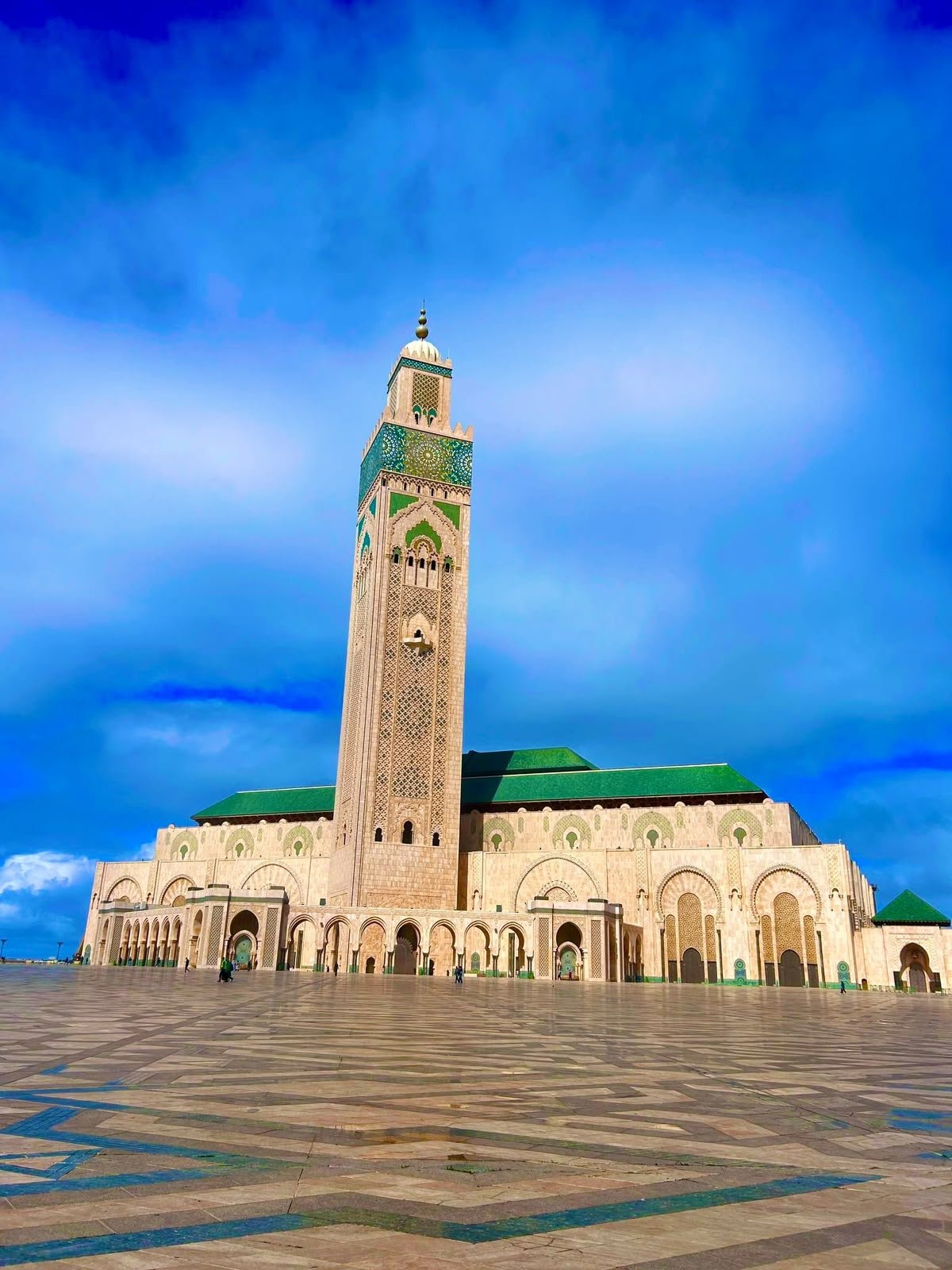
When is the best time to visit Morocco? For most first-time travelers, spring from March to May and autumn from late September to November offer the best balance of comfortable temperatures, long sightseeing days and good conditions across several regions.
However, there is no single perfect month for the entire country. Morocco stretches from the Mediterranean and Atlantic coasts through the Rif and Atlas Mountains to dry pre-Saharan and desert landscapes. The weather in Marrakech can be completely different from Agadir, Chefchaouen or Merzouga on the same day.
If your priority is Marrakech, Fes and cultural sightseeing, April, May, October and early November are particularly attractive. If you are heading toward the Sahara, spring and autumn are generally more comfortable than midsummer. Beach travelers may prefer June through September on the Atlantic coast.
This guide explains the best time to visit Morocco by month and region, with extra detail on weather in Morocco in April, Morocco weather in September, Marrakech, the Atlas Mountains, the coast and desert routes.
Best Time to Visit Morocco at a Glance
| Period | Typical conditions | Best for |
|---|---|---|
| March–May | Mild to warm days, cooler evenings, some spring rain | Cities, road trips, Atlas foothills, desert |
| June | Warm to hot inland, pleasant coast | Coast, early-summer travel, mountains |
| July–August | Very hot inland and south, milder Atlantic coast | Agadir, Essaouira, beaches, high mountains |
| Late September–November | Warm to mild, cooling gradually | Almost all-round travel, desert, cities |
| December–February | Mild coast, cool cities, cold mountains and desert nights | City breaks, winter sun, quieter travel |
So, What Is the Best Month to Visit Morocco?
If you want one simple recommendation, April and October are two of the strongest all-round choices.
April usually brings comfortable daytime temperatures across Marrakech, Fes and much of the interior while the hottest summer weather is still far away. Mountain landscapes can be green, although high elevations may still hold snow and occasional rain remains possible.
October provides another good balance. The intense summer heat has usually eased in inland cities and desert areas, while many coastal destinations remain pleasantly warm.
September is also excellent, especially from the middle or end of the month, but Marrakech, Fes and southern Morocco can still be hot during the first part of September.
Why Does Weather in Morocco Vary So Much?
Weather in Morocco depends heavily on geography.
The Atlantic Ocean moderates temperatures along the western coast. The Mediterranean influences northern Morocco. The Rif and Atlas mountain systems create altitude-related temperature changes, while the Sahara strongly affects the south and southeast.
According to Morocco’s Direction Générale de la Météorologie, the country’s climate ranges from temperate and semi-arid to desert conditions. Most precipitation falls during the period from September to May.
For official climatological information, travelers can consult the Moroccan Directorate General of Meteorology.
Weather in Morocco in April
Weather in Morocco in April is one of the main reasons spring is so popular.
Days are generally warm enough for sightseeing without the extreme heat that can affect Marrakech, Fes and southern Morocco in summer.
Historical climate averages give a useful idea of the regional differences:
| Destination | Typical April daytime high | Typical April night low |
|---|---|---|
| Marrakech | About 25°C | About 13°C |
| Fes | About 22°C | About 10°C |
| Tangier | About 20°C | About 12°C |
| Agadir | About 23°C | About 14°C |
These are historical averages rather than forecasts. Individual days can be warmer, cooler or wetter.
Is April a Good Time for Marrakech?
Yes. April is one of the most comfortable months for Marrakech.
Daytime temperatures are commonly warm enough for rooftop restaurants, gardens and long walks through the Medina without the persistent heat of July and August.
Evenings can still feel cool, so a light jacket or layer is useful.
If Marrakech is central to your itinerary, see our 10 best things to do in Marrakech.
Is April Good for the Sahara?
Spring is one of the periods recommended by Morocco’s National Tourist Office for desert travel.
Days can be warm while mornings and evenings are cooler than in midsummer. Desert temperatures can still change sharply between day and night, so layers remain important.
If you are starting from Marrakech, a longer route such as a 3-day Marrakech to Merzouga desert tour gives much more time for the journey than trying to see the true Sahara in a single day.
Morocco Weather in September
Morocco weather in September feels more like late summer than early autumn in many inland areas.
The coast remains pleasant, while Marrakech, Fes and the southeast can still experience significant daytime heat, especially during the first half of the month.
| Destination | Typical September daytime high | Typical September night low |
|---|---|---|
| Marrakech | About 32°C | About 19°C |
| Fes | About 31°C | About 18°C |
| Tangier | About 27°C | About 19°C |
| Agadir | About 26°C | About 18°C |
September is therefore especially attractive for travelers who want warm weather but prefer to avoid the most intense July and August period.
Is September Better Than April?
It depends on the trip.
| If you prefer… | Better choice |
|---|---|
| Cooler walking weather | April |
| Warmer evenings | September |
| Greener landscapes | April |
| Atlantic beach time | September |
| Lower risk of strong inland heat | April |
| Warm desert trip | Late September |
Morocco Weather by Month
Morocco in January
January is winter. Coastal areas are relatively mild, but Marrakech and Fes can have cold nights. Snow is possible in the Atlas Mountains and temperatures in desert areas can drop sharply after sunset.
January works well for travelers who prefer fewer crowds and do not need hot weather.
Morocco in February
February begins to move toward spring, although weather remains variable.
Days can be pleasant in Marrakech and southern areas, but mornings and nights remain cool. Mountain conditions are still wintry at higher elevations.
Morocco in March
March is the beginning of one of Morocco’s most attractive travel periods.
Temperatures rise, landscapes can be greener and long road trips become more comfortable than during midsummer.
Rain remains possible, particularly in northern and central regions.
Morocco in April
April is an excellent all-round month for Marrakech, Fes, road trips, desert routes and lower-altitude mountain experiences.
Pack layers because warm afternoons can be followed by surprisingly cool evenings.
Morocco in May
May is warmer than April and is another very good month for broad itineraries.
By the end of May, inland and southern destinations can already become hot around midday, but conditions are usually considerably easier than peak summer.
Morocco in June
June marks the transition into summer.
Marrakech, Fes and southern regions become hot, while Atlantic destinations such as Essaouira and Agadir often remain more moderate.
June can also work well for mountain travel when conditions are appropriate.
Morocco in July
July is one of the hottest months in inland Morocco.
Marrakech, Fes and desert regions can experience intense daytime heat, and heat waves can push temperatures significantly above seasonal averages.
The Atlantic coast is often a better choice for visitors who want to travel in July.
Morocco in August
August remains very hot inland.
Agadir and Essaouira benefit from Atlantic influence, making them popular summer alternatives.
If your itinerary requires Marrakech or southern Morocco, plan major outdoor visits early in the morning and later in the afternoon.
Morocco in September
September begins hot but becomes progressively easier, particularly later in the month.
It is excellent for combining coastal travel with cities and can mark the beginning of a very good desert-travel period.
Morocco in October
October is one of the strongest months for an itinerary covering several parts of Morocco.
Inland temperatures are usually more comfortable than in summer, the desert becomes easier to explore and coastal weather can remain pleasant.
Morocco in November
November is cooler and the probability of rain increases in parts of the north and west.
It can still be excellent for cultural sightseeing and desert routes, especially for travelers who prefer mild rather than hot weather.
Morocco in December
December brings winter conditions.
Days in Marrakech and southern areas can still be sunny, but nights become cold. Mountain destinations may see snow, while coastal cities remain generally milder.
Best Time to Visit Marrakech
For sightseeing, March to May and late September to November are generally the easiest periods.
Marrakech has an inland climate, so summer temperatures can become much higher than on Morocco’s Atlantic coast.
Spring is ideal for exploring Bahia Palace, Jemaa el-Fna, the souks and gardens on foot.
Autumn gives a similar advantage once summer heat has eased.
Best Time to Visit Fes
Fes also has hot summers and cool winter nights.
April, May, late September and October are particularly practical for long days walking through the Medina.
Because exploring Fes involves considerable walking through narrow streets, moderate weather can make a noticeable difference to the experience.
Best Time to Visit Chefchaouen
Chefchaouen sits in the Rif Mountains and has a cooler, wetter character than Marrakech.
Spring can bring fresh green landscapes and comfortable walking conditions, although rain remains possible.
Early autumn is also attractive, with warm days and generally easier hiking weather than midsummer.
For more practical information, see our complete Chefchaouen guide.
Best Time to Visit the Sahara Desert
For most visitors, spring and autumn are the best seasons for the Moroccan desert.
This recommendation is also given by Morocco’s National Tourist Office because the south becomes extremely hot during summer.
You can check its official Morocco climate and seasons guide.
March, April, October and November are particularly popular choices.
September can also work well, especially later in the month, although daytime conditions may still be hot.
Winter offers cooler daytime temperatures but very cold nights are possible.
Best Time to Visit the Atlas Mountains
The answer depends on altitude and activity.
For general valleys, villages and lower-altitude walks, spring and autumn are often comfortable.
High-altitude trekking has different conditions. Snow can remain on high peaks in spring, while winter ascents may require specialist equipment and experience.
Summer can be hot in valleys but much cooler at altitude.
If you are staying in Marrakech and want a lighter mountain experience, an Ourika Valley day trip is easier to fit into a short itinerary.
Best Time for Agadir and the Atlantic Coast
Atlantic destinations have some of Morocco’s mildest conditions.
The Moroccan National Tourist Office highlights Agadir’s mild temperatures, coastal breezes and roughly 300 days of sunshine annually.
For beach-focused travel, June through September is attractive, while spring and autumn also work well for sightseeing, surfing and coastal road trips.
Best Time to Visit Essaouira
Essaouira is cooler and windier than Marrakech because of its Atlantic location.
This can be a major advantage during summer, when inland Morocco is much hotter.
Spring and autumn are excellent for exploring the Medina and coast, while summer is popular with visitors escaping stronger inland heat.
If you are based in Marrakech, you can consider a day trip to Essaouira.
Best Time for Ait Ben Haddou and Ouarzazate
Spring and autumn are strong choices for Ait Ben Haddou and the Ouarzazate region.
Summer can be extremely hot and a visit often includes exposed walking with limited shade.
April and October make it easier to explore the ksar and continue through southern Morocco.
Our Ait Ben Haddou guide explains the route from Marrakech, its film history and whether a day trip or overnight stay is better.
Best Time to Visit Morocco for Different Trips
| Travel style | Good period |
|---|---|
| First Morocco trip | April–May or late September–October |
| Marrakech city break | March–May, October–November |
| Sahara desert | March–April, October–November |
| Atlantic beach holiday | June–September |
| Chefchaouen and northern Morocco | April–June, September–October |
| Atlas trekking | Depends on altitude; late spring and early autumn often work well |
| Lower crowds | Winter outside holiday periods |
| Country-wide road trip | April–May or October |
Spring vs Autumn in Morocco
Choose Spring If…
- You prefer greener landscapes.
- You want cooler daytime temperatures.
- You are planning Marrakech, Fes and desert travel together.
- You do not mind occasional rain.
- You want mountain scenery that may still include snow on higher peaks.
Choose Autumn If…
- You prefer warmer evenings.
- You want to combine beaches with cultural cities.
- You are planning desert travel after summer.
- You prefer warmer sea temperatures.
- You want an October road trip across several regions.
Is Summer a Bad Time to Visit Morocco?
No, but your route matters much more.
July and August can be difficult for intensive sightseeing in Marrakech, Fes, Ouarzazate and desert areas because of high daytime temperatures.
That does not mean Morocco should be avoided completely.
Atlantic destinations such as Agadir and Essaouira are considerably more moderate. Higher mountain areas can also offer relief from lowland heat.
If you travel inland in summer, schedule outdoor attractions early, rest during the hottest part of the afternoon and continue sightseeing later in the day.
Is Winter a Good Time to Visit Morocco?
Winter can be excellent for travelers who do not require beach weather.
Marrakech may have sunny afternoons, desert days can be comfortable and popular sites can feel calmer than during spring and autumn peaks.
The trade-off is temperature after sunset. Marrakech, Fes, mountain regions and especially the desert can become cold at night.
Bring proper layers rather than assuming that “Morocco” automatically means warm weather throughout winter.
What to Pack for Morocco by Season
| Season | Useful items |
|---|---|
| Spring | Light clothes, jacket, comfortable shoes, rain layer |
| Summer | Breathable clothes, sun hat, high-SPF sunscreen, water bottle |
| Autumn | Light clothes plus layers for evening |
| Winter | Warm jacket, layers, closed shoes, warmer clothes for mountains/desert |
Whatever the season, comfortable walking shoes are useful for Medinas, historical sites and uneven streets.
Should You Check the Forecast Before Traveling?
Yes. Climate averages help you choose a month, but they cannot predict the exact weather during your stay.
Heat waves, rainfall, mountain snow and strong winds can temporarily produce conditions far outside monthly averages.
Before long drives or mountain activities, check the latest bulletins from the Direction Générale de la Météorologie.
Frequently Asked Questions About the Best Time to Visit Morocco
When is the best time to visit Morocco?
For most travelers, spring from March to May and autumn from late September to November provide the best overall conditions. April and October are particularly good for itineraries covering several regions.
What is the weather in Morocco in April?
April is generally mild to warm. Marrakech averages roughly 25°C during the day and 13°C at night, while coastal and northern cities are usually cooler. Rain remains possible.
What is Morocco weather like in September?
September remains warm or hot, especially inland. Marrakech averages around 32°C during the day, while Agadir is closer to 26°C because of Atlantic influence. Temperatures generally become easier later in the month.
Is April a good month to visit Morocco?
Yes. April is one of the strongest months for a first trip because it works well for cities, road trips, desert travel and many lower-altitude mountain experiences.
Is September a good time to visit Morocco?
Yes. September is particularly good for the Atlantic coast and becomes increasingly comfortable inland as the month progresses.
What is the hottest month in Morocco?
July and August are typically the hottest period in many inland regions. Historical national climate data also show midsummer as the warmest part of the year, although exact conditions vary considerably by location.
When should I visit the Sahara?
Spring and autumn are generally the best periods. March, April, October and November offer a better balance than peak summer for most visitors.
When is the cheapest time to visit Morocco?
Prices depend on destination, holidays and accommodation demand rather than weather alone. Winter outside major holiday periods can sometimes offer better availability, while popular spring and autumn dates may command higher rates.
Can I visit Morocco all year?
Yes. Morocco is a year-round destination if you choose the region according to the season. Summer favors the Atlantic coast and mountains, while winter can work well for cultural cities and southern travel with suitable clothing.
Final Answer: When Is the Best Time to Visit Morocco?
For a first trip covering several parts of the country, April, May, late September and October are among the best times to visit Morocco.
Choose April for milder temperatures and greener spring landscapes. Choose late September or October if you want warmer evenings, coastal time and comfortable autumn desert travel.
The most important rule is to match the season to the route. Marrakech, Chefchaouen, Agadir, the Atlas Mountains and the Sahara do not share the same climate.
If you already know your travel month but are unsure which regions fit the weather best, you can customize your Morocco itinerary around your dates. You can also contact us with your month, arrival city and number of days so the route can be adapted to the season.